
We often talk about the future in terms of technology. Faster systems. Smarter AI. More efficiency. More automation. But beneath all these developments lies a much more fundamental question—one we tend to overlook.
What level of consciousness are we bringing into what we create?
Because technology does not determine the future on its own.
Human consciousness does.
Technology follows consciousness
Technology is not separate from us. It is an extension of human intelligence, creativity and intention. Just as nature organizes itself through biological systems, humanity organizes itself through technological ones. What we build on the outside reflects what is happening on the inside.
When consciousness is driven by fear, technology becomes a tool for control.
When it is driven by ego, technology amplifies power and hierarchy.
When it is driven by separation, technology deepens inequality.
Technology itself is neutral.
It simply scales whatever consciousness is present.
This is why human consciousness matters more now than ever before.
We have overdeveloped the mind and neglected the inner world
Modern society has heavily rewarded cognitive intelligence. Thinking, analyzing, optimizing, producing. The more rational, academic and mentally sharp you are, the more status and success you are likely to gain.
At the same time, other forms of intelligence were pushed to the background: emotional intelligence, intuition, embodied knowing, empathy and ethical sensitivity.
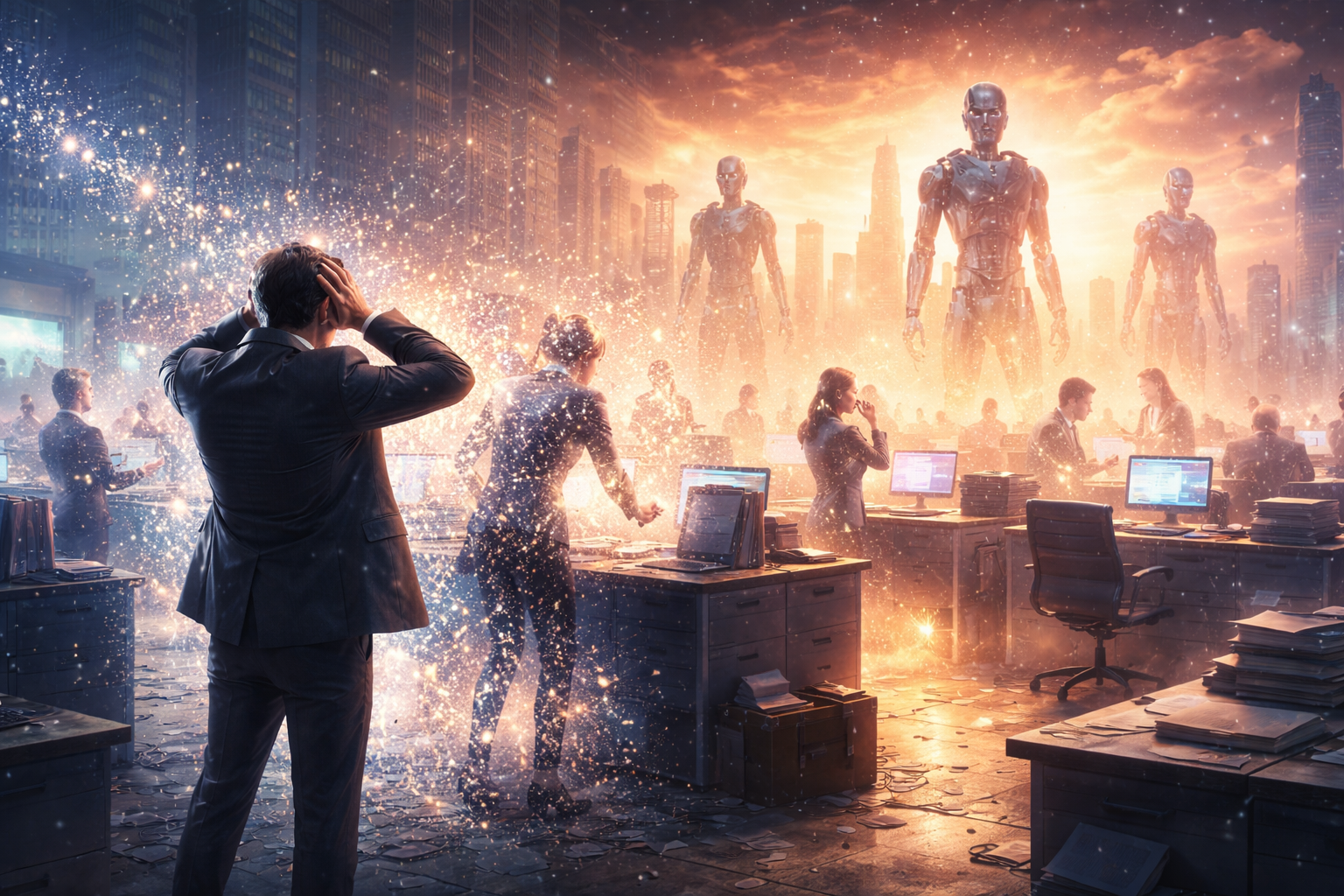
As a result, many people live almost entirely in their heads—disconnected from their bodies, their feelings, and their deeper sense of purpose. AI exposes this imbalance. It outperforms us in the very domain we over-identified with: cognition. And by doing so, it forces a re-evaluation of what truly matters.
Consciousness is what machines cannot replace
Artificial intelligence can process enormous amounts of data. It can recognize patterns, optimize systems and simulate reasoning. But it does not feel. It does not experience. It does not carry responsibility.
Human consciousness includes:
-
awareness of self and others
-
ethical discernment
- intuition
-
emotional depth
-
the ability to feel meaning and purpose
-
responsibility for consequences
As AI takes over more rule-based tasks, consciousness becomes the primary human contribution. Not as an abstract spiritual idea, but as a practical necessity for navigating complexity.
A coming crisis—and why it matters
We are entering a period of multidimensional transformation. Work, education, healthcare, finance, governance—many systems are reaching the limits of what they can sustain. They are rigid, hierarchical and unable to adapt quickly enough to rapid change.
This creates instability, especially around basic human needs like security, income and belonging. When these foundations are shaken, people are confronted with deeper questions about identity and meaning.
Pain, uncomfortable as it is, often becomes the catalyst for consciousness. This coming period will no exception.
From control to coherence
Nature does not operate through centralized control. It operates through self-organizing, decentralized systems that respond intelligently to change. The more complex a system becomes, the more important coherence and alignment are.
Human consciousness plays the same role in society.
Without awareness, technology amplifies chaos.
With awareness, it enables coordination, cooperation, and collective intelligence.
As AI becomes more powerful, the need for mature consciousness—individually and collectively—becomes unavoidable. Not to suppress technology, but to guide it wisely.
The shift from doing to being
For a long time, human value was tied to productivity: what you do, what you produce, how much you earn. But as automation increases, this definition begins to collapse.
We are being invited to redefine value in terms of being rather than doing:
Who are you when you are not performing?
What do you stand for?
What kind of presence do you bring into the world?
This shift is not optional. It is the natural next step in human development.
Consciousness as the real foundation of the future
AI will continue to evolve. Systems will become more capable. Interfaces more natural. Technology will increasingly fade into the background.
What will remain decisive is the quality of human awareness behind it.
A future driven by unconsciousness will lead to greater control and fragmentation.
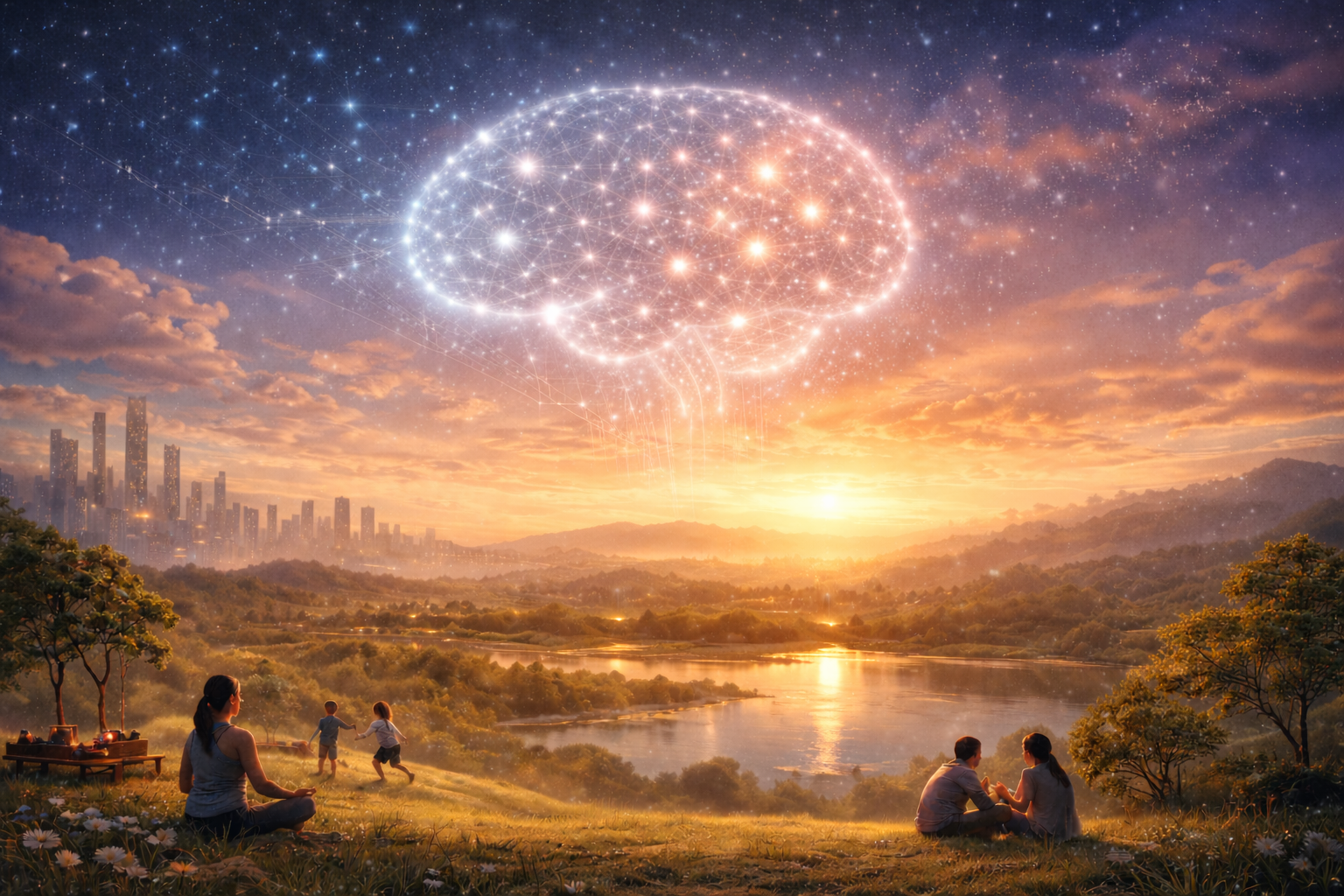
A future guided by consciousness can support freedom, coherence, and life.
This is why the most important work of our time is not technological mastery, but inner development.
In the end, the future will not be defined by how intelligent our machines become, but by how consciously we choose to live alongside them.